
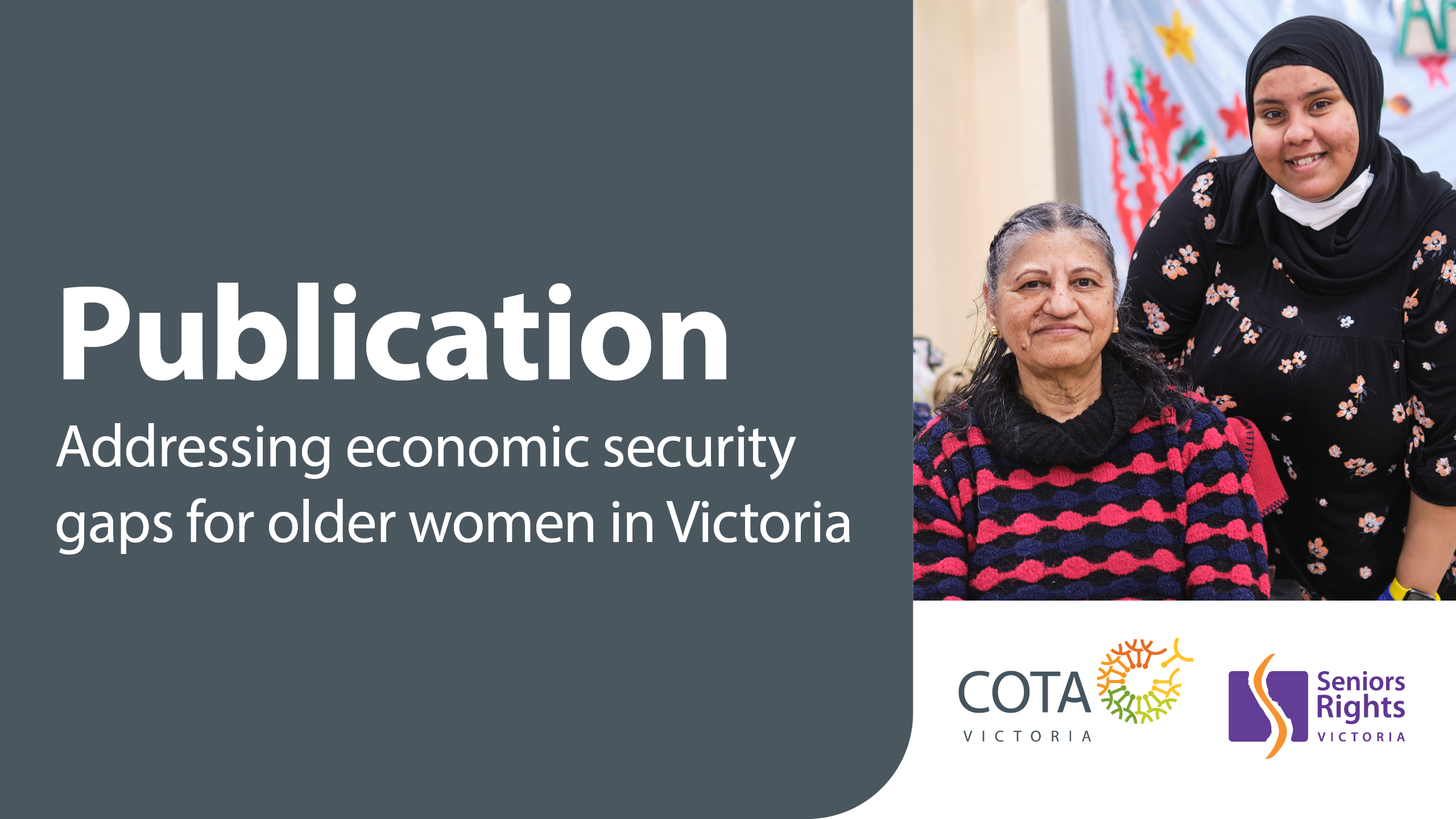
Download full publication as PDF
Executive summary
Older women in Victoria are experiencing a systemic crisis of economic insecurity. Despite decades of participation in work and caregiving, many arrive at later life with significantly less wealth and income than men, leaving a disproportionate number of older women facing poverty and housing stress.
Key life events such as divorce, chronic illness, widowhood, family violence, and years spent in unpaid caring roles often trigger a slide into financial insecurity towards the end of women’s working lives, exacerbating the cumulative disadvantages they face.
Why now? Over recent decades incremental policy choices and market pressures including limited recognition of caregiving in retirement systems, the rise of casualised and part-time work in feminised industries, and chronically under-supplied affordable housing, have combined with recent macro shocks (rising rents, constrained social housing supply, and cost-of-living pressures) to make economic security for today’s older women significantly more precarious than for previous cohorts.
Demographic change, such as an ageing population with more single older women, means demand for targeted services is growing rapidly and system capacity is already under strain. As such, this report focuses on remedial measures that both alleviate immediate harm and shift incentives and program design to avoid repeating these outcomes for future cohorts.
COTA Victoria’s analysis makes clear that addressing older women’s economic insecurity will require coordinated efforts across state and federal governments, as well as collaboration with community and industry partners. This report outlines a strategic agenda, including:
- Victorian Government initiatives: Dedicated state actions to improve older women’s housing security (from expanding public and community housing to tailored homelessness prevention for older women), targeted employment and training programs for women over 50, and strengthened services to prevent and respond to financial abuse of older women.
- Commonwealth reforms: Advocacy for national policy changes such as closing the gender gap in superannuation, increasing income and caregiving supports to reduce poverty among older single women, and continued investment in affordable housing supply for seniors.
- Cross-sector partnerships: Innovative solutions co-designed with community and industry. For example, a pilot Victorian Older Women’s Economic Security Hub — a one-stop service model co-locating employment, housing, and financial counselling support –, alongside partnerships with employers to champion the recruitment of older women, and community initiatives to enhance older women’s financial literacy and social support networks.
Through these measures, Victorian policymakers and their partners can significantly bolster the economic security of older women. Ensuring that no woman is left to age into poverty not only upholds fairness and dignity for older Victorians, but also unlocks the continued contributions of older women to our economy and community. This report provides a roadmap of evidence-based recommendations to achieve this goal, positioning Victoria as a leader in safeguarding older women’s financial futures.